
The Chef’s Guide to Choosing the Right Microgreens
Microgreens can do much more than add a splash of green to a plate. The right variety can bring fresh flavor, vibrant color, delicate texture, and visual contrast to a dish.
For chefs, choosing the right microgreens starts with understanding what each variety brings to the plate—and how it works with the other ingredients.
Here’s a simple guide to help you choose.
1. Start With the Flavor
Flavor should be one of the first things you consider.
Some microgreens have a mild, fresh flavor, while others bring peppery, spicy, or distinctive notes.
For example:
- Pea Microgreens — fresh, mild, and naturally sweet
- Spicy Mustard — bold with a noticeable mustard kick
- Purple Radish — peppery with a vibrant appearance
- Broccoli — mild and versatile
- Arugula — fresh with a more pronounced, peppery character
- Kohlrabi — delicate and fresh
Think about the main flavors in your dish and choose a microgreen that complements rather than overwhelms them.
2. Consider the Color
Presentation matters, especially in professional kitchens.
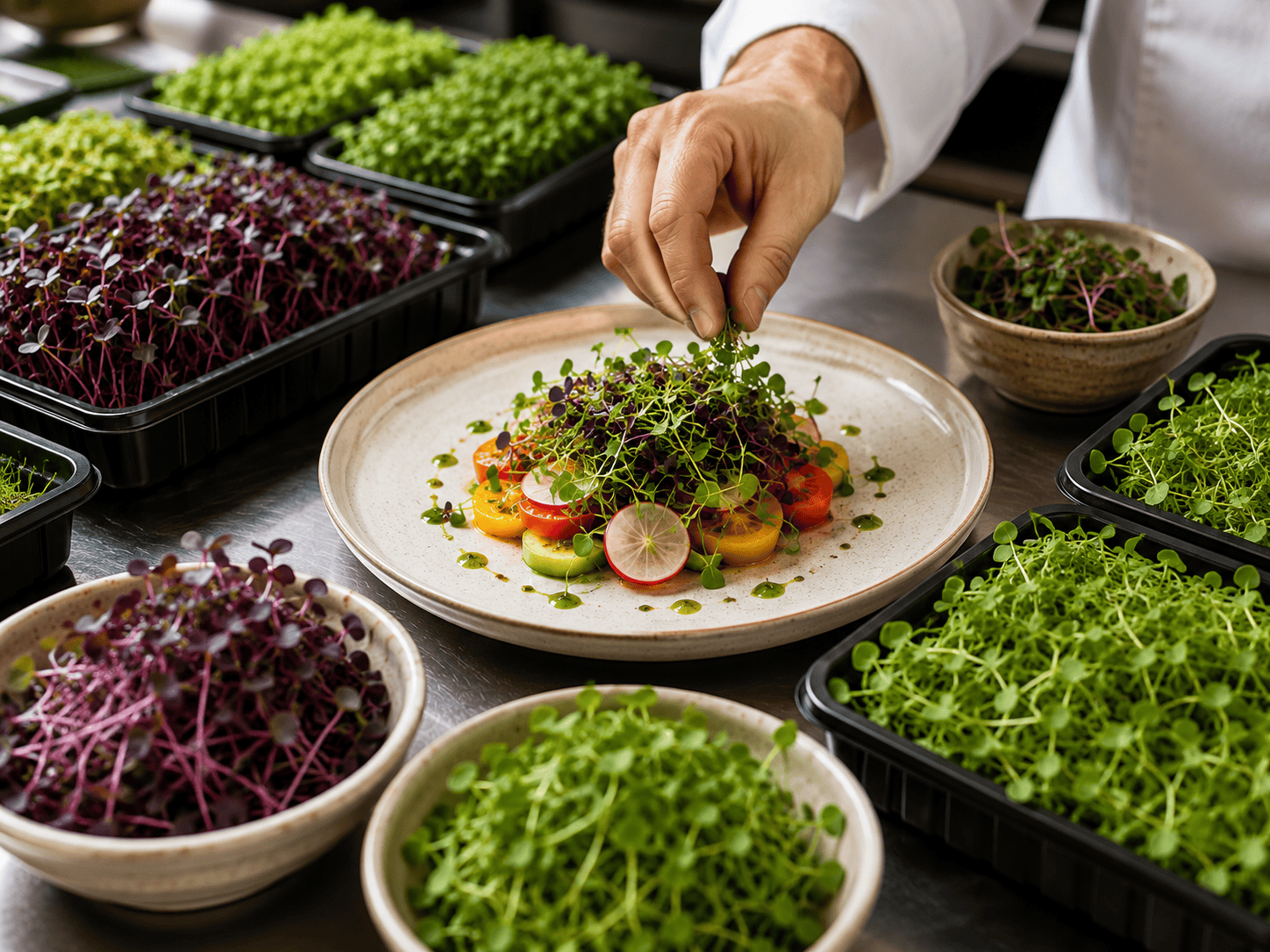
Green microgreens can create a clean, natural finish, while purple and burgundy varieties can provide beautiful contrast against lighter ingredients.
For example, purple radish microgreens can add visual depth to a dish with creamy sauces, white proteins, or pale vegetables.
Sometimes the right microgreen isn't simply the one with the best flavor—it's the one that completes the plate visually.
3. Match the Texture to the Dish
Microgreens can also add a delicate textural element.
Tender shoots can work beautifully with:
- Salads
- Grain bowls
- Seafood
- Eggs
- Sandwiches
- Fresh vegetables
For composed dishes, consider how the microgreens will sit on the plate and interact with the other ingredients.
The goal is to create balance rather than simply adding more ingredients.
4. Think About the Dish
Different dishes call for different microgreens.
Breakfast & Brunch
Try mild varieties such as Peas, Broccoli, or Kohlrabi with eggs, avocado toast, or breakfast bowls.
Salads
Combine different varieties to create layers of flavor, color, and texture.
Seafood
Delicate microgreens can complement seafood without competing with its natural flavors.
Meat & Main Courses
Peppery varieties such as Radish, Mustard, or Arugula can provide a lively contrast to richer dishes.
Sandwiches & Wraps
Pea shoots and other tender varieties can add freshness and texture without requiring complicated preparation.
5. Don't Forget the Seasoning
Microgreens should work alongside the rest of your dish.
If your recipe already contains strong spices or sauces, a delicate variety may provide balance.
If the dish is relatively mild, a more flavorful microgreen can add another layer of character.
Think of microgreens as another seasoning element—not just decoration.
6. Mix and Match
One of the advantages of working with microgreens is the ability to combine varieties.
Pairing a mild green variety with a peppery or colorful variety can create a more interesting finish.
For example:
Peas + Purple Radish
Fresh and mild with a peppery contrast.
Broccoli + Spicy Mustard
A softer base with a sharper finish.
Experiment with different combinations until you find pairings that complement your menu.
7. Consider Your Kitchen's Needs
For professional kitchens, flavor isn't the only consideration.
Consistency, availability, freshness, and the ability to maintain a reliable supply are also important.
A microgreen may be perfect for one signature dish but less practical if it's difficult to source consistently.
That's why choosing varieties that fit your menu, volume, and weekly kitchen needs can make your microgreen program much easier to manage.
Standard or Premium?
At Root & Rack Farms, our selections are designed to give kitchens flexibility.
Our Standard Selection includes versatile favorites such as Peas, Spicy Mustard, Broccoli, Kohlrabi, Amaranth, Arugula, and Purple Radish.
Our Premium Selection features slower-growing varieties such as Premium Leeks and Premium Cilantro for chefs looking for something more distinctive.
Whether you're looking for an everyday finishing green or something to make a signature dish stand out, the right choice depends on the flavor, presentation, and purpose of the dish.
The Bottom Line
The best microgreen isn't necessarily the most colorful or the most flavorful.
It's the one that works with your dish.
Consider the flavor first, then think about color, texture, presentation, and how consistently your kitchen needs the product.
Once you start experimenting with different varieties, microgreens can become more than a garnish—they can become an important part of your culinary toolkit.
Ready to Explore Your Options?
Discover Root & Rack Farms' Standard and Premium microgreens and find the varieties that fit your kitchen.